Pakistan-Afghan border closure costs exporters $177 million a month, business groups warn
Pakistani exporters are losing an estimated Rs50 billion ($177 million) each month due to the continued closure of key border crossings with Afghanistan, business leaders said this week, warning that prolonged disruption could permanently erode Pakistan’s access to Afghan and Central Asian markets.
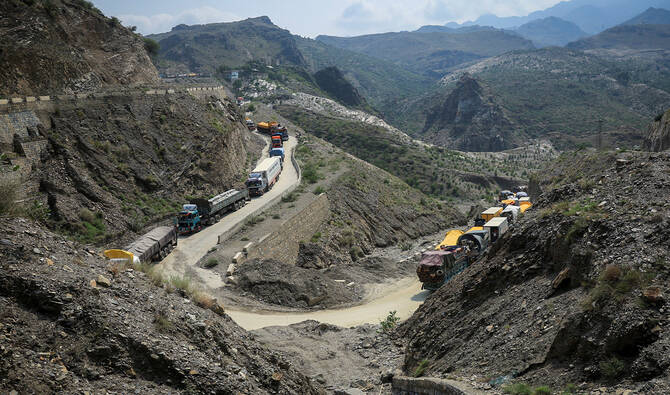
Pakistan shut several major border crossings with Afghanistan in October 2025 following one of the deadliest military escalations between the two neighbors in recent years. Although a ceasefire was announced on Oct. 19, trade has remained suspended. Before the border closure, bilateral trade between Pakistan and Afghanistan was valued at roughly $2 billion a year, making the neighbor one of Pakistan’s major regional trading partners.
Pakistan’s Foreign Office has said repeatedly that border crossings will stay closed until Kabul provides credible, written assurances that it will prevent cross-border militant attacks and act against groups like the Pakistani Taliban (TTP) that Islamabad says operate from safe havens in Afghanistan, whose government denies this.
Business leaders from Khyber Pakhtunkhwa and Balochistan, the two Pakistani provinces bordering Afghanistan, say the shutdown has disrupted supply chains, halted exports and undermined Pakistan’s role as a regional trade corridor linking South Asia to Central Asia.
Speaking to Arab News, Junaid Altaf, president of the Sarhad Chamber of Commerce and Industry, said the economic impact had become severe.
“The situation is that this is indeed a very significant issue and it’s becoming even more serious,” he said.
“The business community is being heavily affected by the border closures, not just the business community but everyone from laborers to industrialists. Our clearing agents, factories, mills, the labor sector, and the entire transportation and logistics chain are all being affected.”
Pakistan and Afghanistan exchanged goods worth more than $1.6 billion in 2024, underscoring the historic importance of transit routes now blocked.
Altaf said around 12,000 cargo containers were currently stranded due to the border closure.
“Right now, around 12,000 containers are stuck and are incurring demurrage charges, and this is becoming a major problem. Shipping lines are involved, and it needs to be addressed.”
Traders have urged authorities to allow a temporary reopening of the border to clear backlogs.
“Our suggestion is to open the border for about a month just to clear this backlog,” Altaf said. “The goods of our Afghan brothers are in transit, and our transporters are saying that containers have been stationary for so long that even their tires are wearing out just from sitting loaded.”
He warned the consequences extend beyond bilateral trade.
“This is not just a Pakistan-Afghanistan issue, it’s a lifeline for trade to Central Asian republics and even Russia.”
“BLOOD AND BUSINESS”
Similar concerns were raised in Balochistan province, where exporters say agricultural and industrial shipments have come to a standstill.
Muhammad Ayub Maryani, president of the Quetta Chamber of Commerce and Industry, said the closure was destroying seasonal exports:
“The main problem right now is that because the border is closed, our seasonal produce specifically our potato and orange season is being completely ruined. Our farmers, growers, and exporters are all badly affected.”
Maryani said the disruption was costing exporters heavily.
“Another big issue is that our exports of pharmaceuticals, cement, fresh vegetables, meat, and rice to Afghanistan are completely blocked right now. We’re losing at least 50 billion rupees ($177 million) a month.”
He warned Pakistan could lose regional markets for decades.
“Iran or other countries like Uzbekistan or Turkmenistan will capture this market for the next 20–25 years, and we won’t get it back.”
Pakistan’s military has defended the closure on security grounds. In a Jan. 6 press briefing, military spokesperson Ahmed Sharif Chaudhry said national security remained the top priority and cautioned against reopening border crossings without addressing security threats. In previous briefings, he has said “blood and business cannot go together.”
Arab News contacted Pakistan’s Ministry of Commerce for comment but received no response by the time of publication.



-822623.jpg)