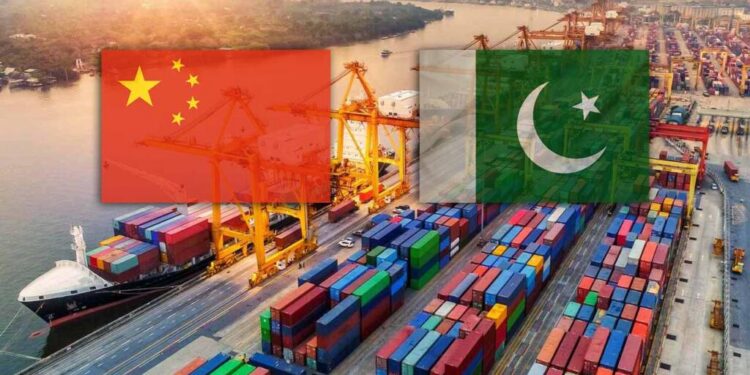
Pakistan and China are working to deepen their trade relationship. Both countries are negotiating a third phase of the China-Pakistan Free Trade Agreement, known as CPFTA. This new phase could open fresh opportunities for Pakistani exporters.
The agreement already has a long history. China and Pakistan signed the original FTA in November 2006. It came into effect in July 2007.
What Phase III Covers
The current round of talks focuses on nearly 700 additional tariff lines. Pakistan wants China to extend more tariff concessions on these products. Officials have prioritized specific sectors in these negotiations. Textiles, minerals and meat products sit at the center of the discussion. These sectors offer strong potential for Pakistani exporters.
Meat exports alone carry significant promise. Officials estimate this sector could generate up to $5 billion in potential exports. That would mark a major shift from Pakistan’s current export profile.
Pakistan’s Commerce Minister, Jam Kamal Khan, has led much of this engagement. He has held detailed talks with Chinese Ambassador Jiang Zaidong on expanding market access. Commerce Secretary Jawad Paul has also taken part in key negotiating sessions.
Seeking Parity with Other Trade Partners
Pakistan’s core argument centers on fairness. China has granted unilateral zero-tariff access to 53 African countries since May 2026. ASEAN member states also enjoy strong preferential access to Chinese markets.
Pakistani officials want similar treatment. They argue that earlier CPFTA concessions have lost some value over time. This happened as China signed newer trade agreements with other regions. Securing tariff parity with these regions could meaningfully boost Pakistan’s competitiveness. Pakistani goods would then compete on more equal terms in the Chinese market.
Progress Already Made
Negotiators have already achieved concrete results during these talks. More than a dozen Sanitary and Phytosanitary protocols have been signed so far. These protocols cover health and safety standards for traded goods, particularly in agriculture.
Technical Barriers to Trade agreements have also progressed. These help reduce non-tariff obstacles that can slow down trade even when tariffs are low.
Pakistan is also pushing for a new trade facilitation measure. Officials have proposed a “Green Channel” at the Sust-Khunjerab border crossing. This would speed up customs clearance for goods moving along this key land route. The Khunjerab route connects Pakistan directly to China’s Xinjiang region. Faster processing here could benefit exporters using this corridor, particularly those shipping minerals and other bulk goods.
Strong Trade Growth Already Underway
Even before Phase III concludes, trade between the two countries has grown significantly. Pakistan’s exports to China reached more than $1.55 billion between January and May 2026. This marked a 48.7 percent increase compared to the same period in 2025.
Copper products drove much of this growth. Rice and sesame exports also contributed strong monthly performances throughout the year.
Zhejiang province remained the largest single destination for Pakistani goods. Beijing and Guangxi also recorded notable increases in imports from Pakistan. Officials point to the existing free trade agreement as a key driver behind this growth. In fiscal year 2024-25, Pakistan exported $2.375 billion worth of goods to China. Of this total, $2.16 billion moved under FTA preferences.
Building a More Balanced Trade Relationship
Officials have also discussed shifting Pakistan’s export profile during these talks. Currently, Pakistan exports significant volumes of raw materials, such as copper ore and raw cotton. The goal is to move toward higher-value, processed goods instead. This includes finished textiles, processed minerals and higher-value meat products. Value-added exports typically generate more revenue and support more local jobs than raw material shipments.
This shift connects directly to the sectors prioritized in Phase III negotiations. Textiles, minerals and meat all appear as focus areas precisely because they offer this value-added potential.
A Wider Pattern of Economic Engagement
These trade talks fit into a broader pattern of economic cooperation this year. Pakistan and China have held numerous high-level meetings throughout 2026, covering investment, infrastructure and industrial cooperation.
A major investment forum in Guangzhou brought business leaders from both countries together earlier this year. That event generated new deals across sectors including electric vehicles and construction materials.
Agricultural cooperation has also expanded through separate channels. Training programs and technical exchanges have covered crops ranging from kiwifruit to sesame, supporting Pakistan’s efforts to diversify its farm exports.
Together, these initiatives point toward a trade relationship that is broadening across more sectors and more provinces within China.
Looking Ahead
No final agreement on CPFTA Phase III has been announced yet. Negotiations continue between officials from both countries. The scope of this phase suggests both sides expect meaningful changes once it concludes. Nearly 700 tariff lines represent a substantial expansion beyond the current agreement’s coverage.
For Pakistani exporters, the outcome of these talks could open significant new opportunities. Sectors like meat, textiles and processed minerals stand to benefit most directly if China grants the requested concessions.
For now, both countries continue building on the strong trade momentum already visible in this year’s export data, while working toward a more comprehensive agreement that better reflects the full potential of their economic partnership.


.jpg)