Pakistan Suggests Direct Feeder Lines to Reduce Freight Costs with Malaysia
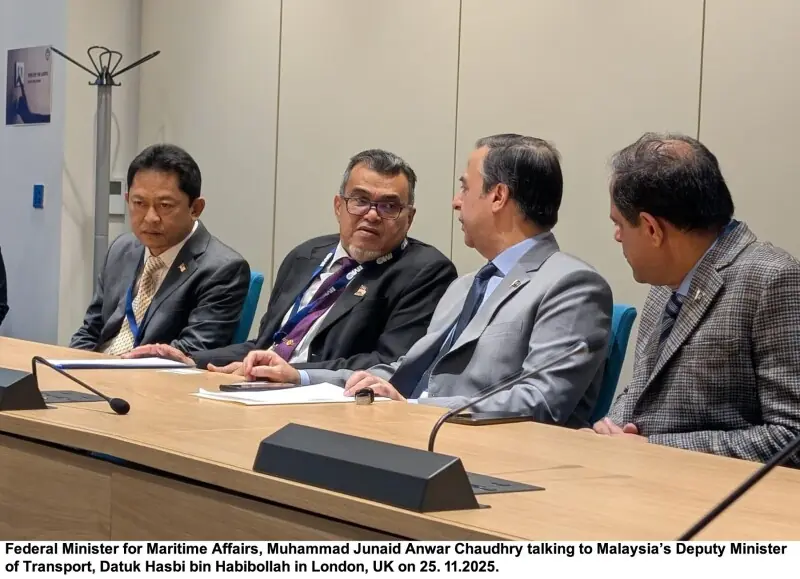
Pakistan and Malaysia are setting the stage for enhanced maritime collaboration, particularly in training and port sector integration. This initiative emerged from a meeting between Malaysia’s Deputy Minister of Transport, Datuk Hasbi bin Habibollah, and Pakistan’s Federal Minister for Maritime Affairs, Muhammad Junaid Anwar Chaudhry, during maritime discussions in the United Kingdom.
During their discussions, the ministers assessed existing maritime cooperation and sought new areas for collaboration. Chaudhry emphasized the need for deeper operational ties along trade routes, proposing the establishment of direct feeder shipping lines connecting Pakistan and Malaysia, with further links to Indonesia. This initiative aims to cut transport times and lower freight costs, thereby significantly boosting Pakistan’s rice exports to Southeast Asia. In addition, it aims to streamline edible oil imports from Malaysia and Indonesia. This aligns with Pakistan’s broader strategy to enhance its maritime connectivity with ASEAN economies, which have shown increasing demand for its agricultural products.
For Malaysia, this collaboration represents an opportunity to expand its maritime training network and improve regional logistics as part of its transport sector modernization efforts. Chaudhry proposed signing a Memorandum of Understanding (MoU) focused on enhancing seafarer training and facilitating the exchange of marine cadets. This proposed exchange program would allow Pakistani cadets to train in Malaysian academies, and vice versa, fostering professional development for young seafarers and strengthening long-term cooperation in the maritime sector.
In addition to training, Chaudhry noted Pakistan’s advancements in digital port solutions, highlighting the Pakistan Single Window platform, which is now operational at Karachi Port and Port Qasim. This digital trade infrastructure is presented as a model for enhancing cargo clearance efficiency, promoting transparency, and streamlining overall trade facilitation.
The ministers agreed to schedule further technical consultations in the upcoming weeks to finalize the MoU’s scope, define training modules, and establish mechanisms for the cadet exchange program. Overall, this initiative signals a robust commitment from both countries to foster bilateral ties in the maritime arena, enhancing operational efficiencies while developing the next generation of maritime professionals.