Shipping Through Risk: Why Indian SMEs Need to Rethink Cargo Insurance
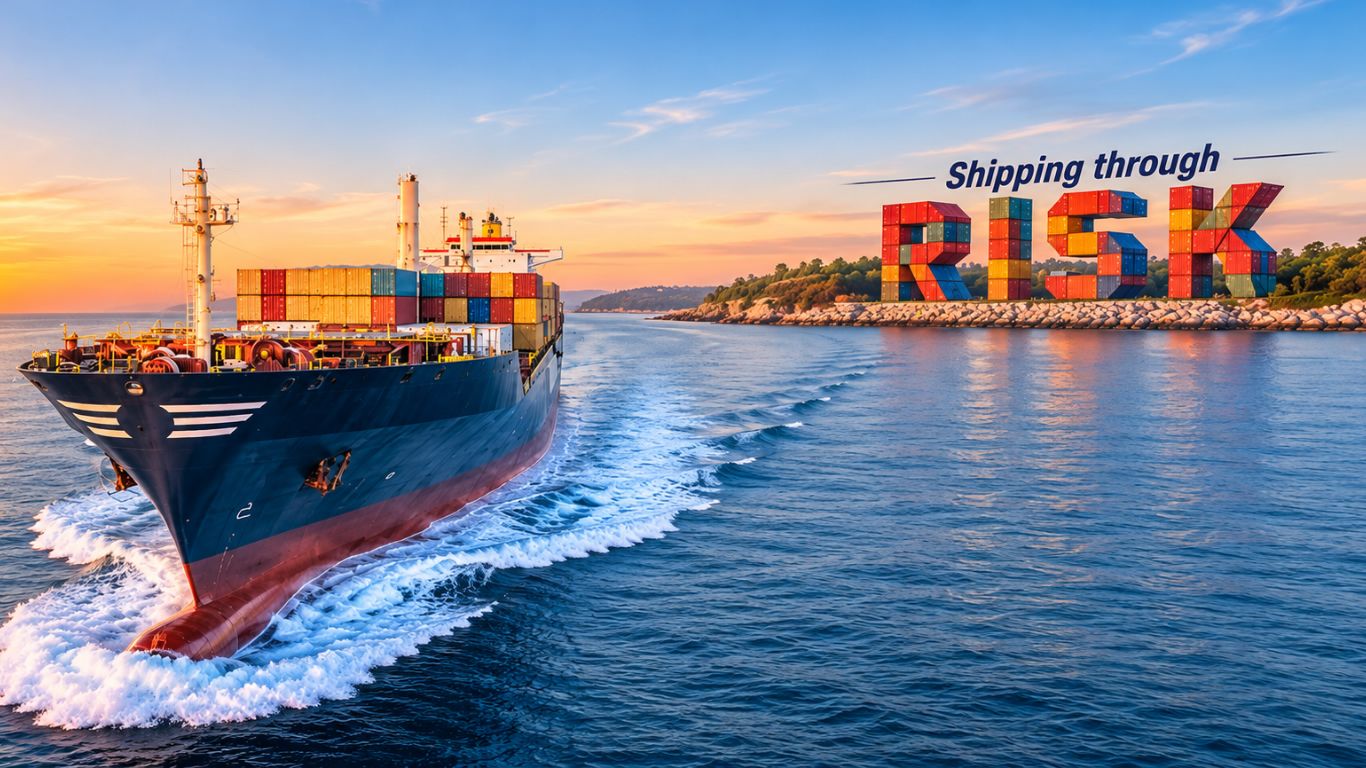
With conflict in West Asia, Red Sea insecurity and rerouting are driving up transit times, freight costs and shipping risks. For Indian small and medium-sized enterprises (SMEs), these disruptions add to the pressure on margins, cash flow and business continuity. Yet cargo insurance remains an overlooked aspect of risk management for many smaller businesses. This feature examines why SMEs remain underinsured, the misconceptions surrounding carrier liability and marine cargo insurance, how evolving maritime risks are changing coverage requirements, and the steps businesses can take to make cargo insurance an integral part of their supply-chain risk management strategy.
In 2026 maritime disruptions became an operational condition, instead of a one off shock. The US-Israel Iran war which initially halted ships movement through the Strait of Hormuz. Just as vessels began to resume sailings, the Red Sea once again came into focus, with Yemen’s Iran-aligned Houthis stepping up attacks on commercial shipping. Currently, Ships remain exposed to “indiscriminate attacks” in the Strait of Hormuz, even if they try to hide their movements by switching off tracking systems.
These disruptions are pushing small and medium-sized enterprises (SMEs) out of the global value chain as rising costs hit smaller firms harder than large companies, warned the UN Trade and Development (UNCTAD).
While large companies can spread risks across suppliers, markets and financing sources, SMEs have fewer options. Higher energy, transport and financing costs can squeeze margins, disrupt supply chains and force smaller businesses to cut production, delay investment or exit altogether.
In March this year, the Government of India launched the RELIEF (Resilience & Logistics Intervention for Export Facilitation) scheme with an outlay of INR 497 crore to provide relief to India’s exporters facing disruptions due to the ongoing West Asia conflict.
These developments underscore the need for Indian SMEs to reassess how they manage shipping risks. As shipping routes become less predictable, cargo insurance assumes greater importance, prompting Indian SMEs to reassess whether their existing coverage is adequate for the risks involved in moving goods across borders.
The Cargo Insurance Gap: Why SMEs Remain Underprotected
While the risk grows in global shipping, cargo insurance continues to remain an overlooked aspect of risk management for many small and medium-sized enterprises (SMEs). Businesses exporting, importing or moving goods domestically may ship consignments worth substantial amounts while remaining uninsured or carrying coverage that falls short of the actual value of their cargo.
For Balasundaram R, Senior Advisory Board Member and Head of Marine Practice/Marine Insurance, PolicyBazaar for Business, the gap often begins with how smaller businesses perceive risk. “In my opinion, a lot of it comes down to the way smaller businesses perceive the risk. There is often a feeling that, ‘The cargo I deal in is not really prone to loss or damage, so why would I need insurance?’” he says.
However, as Balasundaram R points out, the nature of the goods does not eliminate the possibility of loss. “The cargo by its nature may be less risky or moderately risky, but not totally free from risk. So risk protection becomes necessary in the form of cargo insurance.”
Businesses may also forgo insurance because their terms of sale do not require it or because long-standing relationships with buyers create an assumption that disputes and claims are unlikely. This can leave exporters exposed to financial losses even when they believe their contractual arrangements adequately protect them.
Carrier liability versus marine cargo insurance
One of the most persistent misconceptions among SMEs is that the carrier is responsible for the full value of goods throughout their journey. Many assume that shipping lines, freight forwarders, road transporters or airlines will compensate them fully if a shipment is lost or damaged. Some carriers, particularly in road transport, may also collect additional charges while assuring consignors that claims will be settled in full.
Balasundaram R cautions against relying on such assurances. Although carriers have obligations concerning the safe carriage of goods, their liability is subject to applicable legal and contractual limitations. Recovering compensation may require the exporter to establish the carrier’s liability, and even a successful claim may not cover the full value of the shipment.
Marine cargo insurance serves a different purpose: it protects the insured party’s financial interest against losses covered by the policy, subject to its terms and exclusions. Rather than depending solely on a claim against the carrier, the policyholder can seek compensation from their insurer for an insured loss.
Rethinking Cargo Cover in an Era of Disruption
As geopolitical tensions reshape maritime routes, cargo insurance is becoming a more complex decision for businesses moving goods across international markets. For exporters and importers, these changes affect not only the cost and duration of a shipment but also the terms under which their cargo remains insured.
Jitendra Srivastava, Chief Executive Officer of Triton Logistics & Maritime
, the nature of shipping risk is evolving, with transit time itself becoming a source of potential loss. “The risk has changed because transit time itself has become a risk. Earlier, we were mainly worried about cargo getting damaged or lost. Today, a shipment can be perfectly intact and still create a loss because it has spent another 15 or 20 days at sea, at anchorage, at a transshipment port or waiting for a new route,” he says.
This is particularly significant for pharmaceuticals, food, chemicals, perishables and technology products, where shelf life, product condition or market relevance can be affected by extended transit. “So an SME needs to look at the cargo, the route and the expected transit time together when deciding what insurance it actually needs,” Jitendra Srivastava adds.
Beyond the changing nature of maritime risks, industry experts stress that cargo insurance must be treated as a fundamental part of an SME’s risk management strategy.
Balasundaram R says, “For an SME, cargo insurance should not be seen as an optional cost. It is as important as insuring your stocks and fixed assets, if not more, because goods are exposed to risks throughout their journey, from the time they leave the supplier until they reach the customer. A shipment can be damaged, lost or delayed due to an accident, theft, fire or natural event, and that can have a direct impact on the business’s cash flow and customer commitments. Thus, businesses should look at marine cargo insurance as part of their overall risk management, not something to consider only after a loss.”