US Tariffs Weigh on Bangladesh Exports as Competition Intensifies in Key Markets
Bangladesh’s export growth has remained in negative territory over recent months, as newly imposed tariffs by the United States have disrupted global trade flows, with knock-on effects felt across major markets, including the US itself.
The impact has been particularly visible in Bangladesh’s principal export destinations, where demand has weakened, according to Mohammad Hatem, president of the Bangladesh Knitwear Manufacturers and Exporters Association (BKMEA). He said the revised US tariff regime had effectively limited access to the American market for exporters from countries such as India and China, prompting them to redirect shipments towards the European Union.
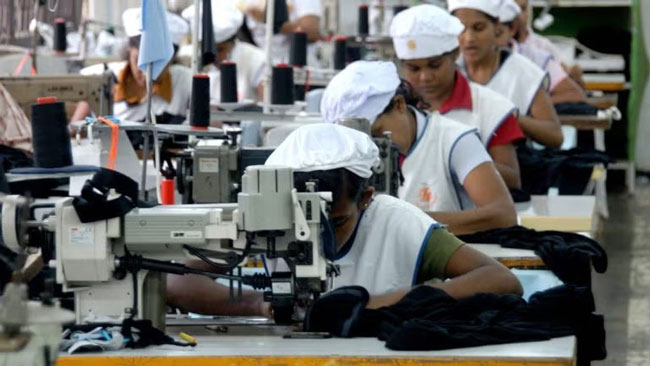
He noted that these countries were now competing aggressively in the EU by offering garments at significantly lower prices, allowing them to secure orders that might otherwise have gone to Bangladeshi suppliers. As a result, Bangladesh’s exporters have struggled to compete on price for comparable products, leading to a decline in shipments to the European market as well.
Hatem said Indian exporters, in particular, were benefiting from a series of government support measures designed to cushion the impact of US tariffs. He pointed to successive policy packages announced by New Delhi, including a recently approved package valued at Rs. 70 billion (US $ 776 million), which he said had helped Indian manufacturers maintain competitive pricing.
By contrast, he said Bangladeshi exporters were facing mounting pressure following the withdrawal of several export incentives. Citing conditions under the International Monetary Fund programme and the country’s impending graduation from least developed country (LDC) status, he said the government had rolled back various forms of support, including cash incentives. The remaining assistance expired in December, and industry representatives have called for an extension, warning that such support is critical to the sector’s survival.
He cautioned that the strain was already evident, with a number of spinning mills having closed and several garment factories suspending operations, developments he described as a worrying signal for the broader export sector.
Hatem also observed that export orders typically slow in the run-up to national elections, a trend that has persisted this year. However, he said there was scope for a recovery in the second half of the year, provided the government engages closely with industry stakeholders and implements timely and realistic policy measures after the election.