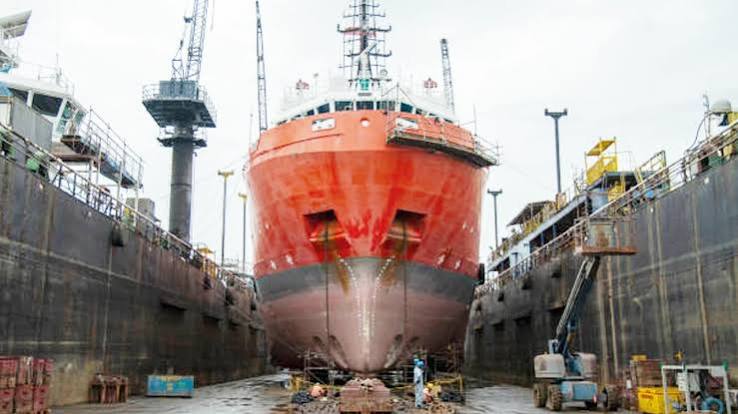
Global shipbuilding orderbook breaks 2008 record with output heading for new peak
The global shipbuilding orderbook has surpassed its pre-financial crisis record, with the world’s yards set to eclipse their previous production peak next year and expand output still further in 2028.
New figures from Clarksons Research put the backlog at 226.1m compensated gross tonnes (cgt) in October, edging past the September 2008 record of 225.5m cgt. Worth approximately $700bn, the orderbook has grown 24% in the past year and is triple its 2020 level.
The production surge is only beginning. Clarksons projects 64m cgt of deliveries in 2027, up 24% on this year’s estimated output and 18% above the previous record of 55m cgt set in 2010. Production could climb to 72m cgt in 2028, 60% above 2025 levels.
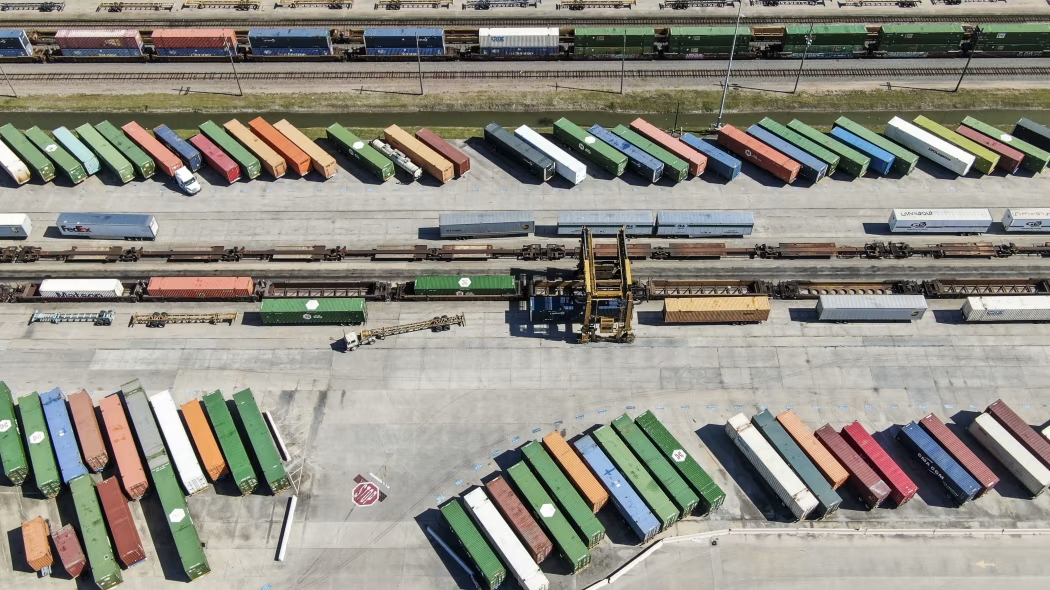
Despite the parallels with 2008, the market looks very different. Today’s orderbook is equivalent to just 25% of the existing fleet by gross tonnage, against 53% eighteen years ago. Measured in deadweight, the backlog is actually smaller, at 601m dwt versus 657m dwt, reflecting a significant change in vessel mix. Containerships now account for 31% of the orderbook by cgt, almost double their 2008 share, with gas carriers rising from 5% to 15%. Bulkers have fallen from 31% to 17%. Alternative-fuel-capable ships represent 43% of the backlog, compared with just 2% at the previous peak.
China’s dominance is the defining change. Its yards control 68% of the global orderbook, twice their 2008 share, and account for 60% of this year’s output.
South Korea and Japan have slipped to 17% and around 8% respectively. Six of the world’s ten largest yards by orderbook are now Chinese.
Hengli, which only restarted shipbuilding in 2022, has leapt to the top of the individual yard rankings with 485 ships on order.
On Dalian-based Hengli’s remarkable rise, analysts at Affinity noted in a recent report: “Nothing can take away from the objectively astounding reality of having sold close to 400 ships so far this year. No yard in history has ever even been close to that… And with so much money pouring in, expect to see even further investment from Hengli in capacity expansion to satisfy the insatiable demands of the market.”
The emergence of new facilities at Yingkou and Nantong and the reopening of previously dormant yards illustrate China’s extraordinary capacity expansion.
Clarksons is tracking approximately 225 shipbuilding expansion projects worldwide, more than three-quarters of them in China. The industry nevertheless has around 500 active builders today, compared with roughly 1,000 in 2008.
The expansion carries risks. BIMCO recently warned that China’s capacity buildout could leave yards underutilised when ordering eventually slows, while Banchero Costa expects some scheduled 2027 and 2028 deliveries to slip into subsequent years.
The ballooning shipyard capacity scene in Asia garnered much discussion at the Splash-organised Maritime CEO Forum in Monaco.
“We have been seeing a lot of new yards popping up, left, right, and centre, and the zombie shipyards being revived,” Milena Pappas from Star Bulk told delegates attending the exclusive shipowner gathering.
On concerns about the capabilities of some new yards, Pappas revealed that prospective builders had asked owners to arrange the supply of engines themselves, while on Hengli’s extraordinary expansion she said: “The Hengli example for me is a case study. They’re delivering 90 vessels this year and they’re supposed to ramp up to 300 by 2030, which is a game changer.”
Cesare d’Amico, who heads up Italian shipowner d’Amico Società di Navigazione warned on the potential for overcapacity.
“The number of ships that can be added every day, every week is really a lot,” he said, a point of view shared by John Michael Radziwill, the chairman of Monaco owner CTM.
“It will get oversupplied. You’re not going to have a shortage of dry cargo ships for very long,” Radziwill said.