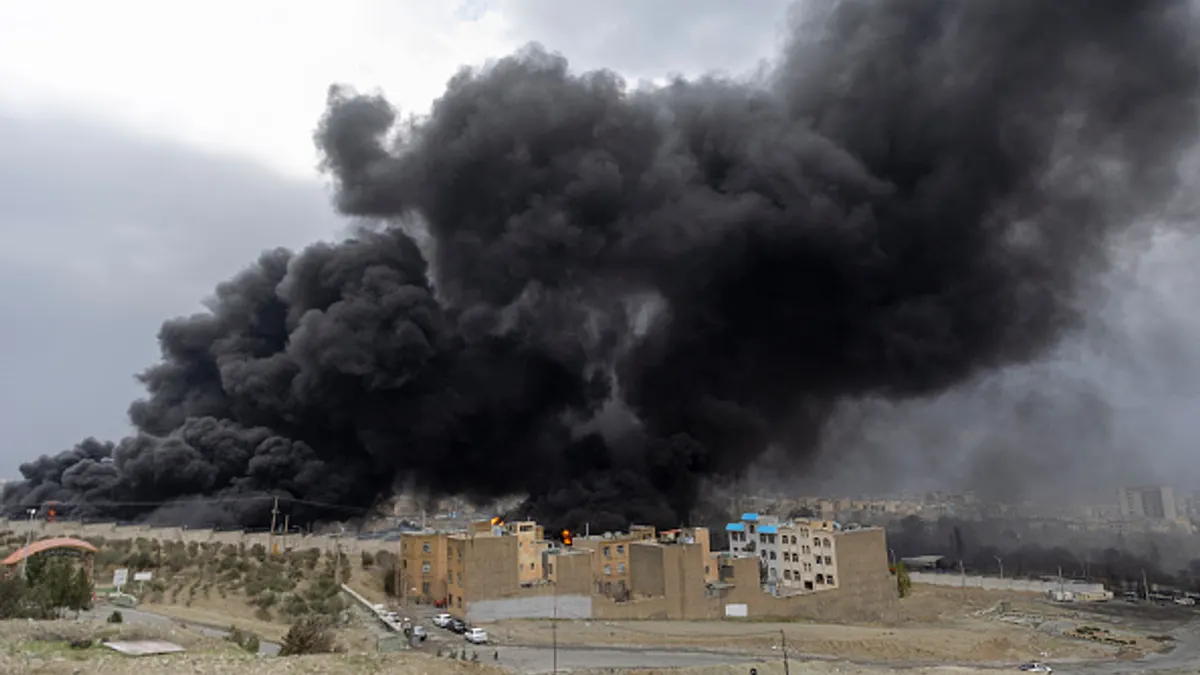
Container port congestion across the Middle East has surged to a record high, according to Linerlytica, with vessels facing waits of more than a week at key regional gateways as disruption around the Strait of Hormuz continues to reshape cargo flows.
In its latest weekly report, the consultancy highlighted severe berthing delays at Khorfakkan, where MSC has deployed 24,000 teu ships on an expanded Far East–Middle East service despite mounting congestion.
New figures from Kuehne+Nagel show average vessel waiting times at Khorfakkan reaching 7.25 days as of October 30, while Fujairah recorded an average of 8.86 days over the preceding week. Sharjah is also struggling, with vessels waiting approximately three days for berths.
The problems extend well beyond the quayside. Container transfers from Khorfakkan and Fujairah to Jebel Ali, Sharjah and Abu Dhabi, which previously took around five days, are now taking between 12 and 15 days.
Elsewhere, Hapag-Lloyd’s latest operational advisory puts yard density at Oman’s Salalah port at 84%, with berthing delays of up to 36 hours. Sohar faces waits of two to three days, while Jeddah’s container yards are operating at 76% density.
Maersk announced temporary booking restrictions on October 30 covering Khorfakkan, Fujairah and selected Upper Gulf destinations, citing congestion and continuing regional disruption.
The congestion is concentrated at alternative gateways handling diverted cargo rather than uniformly across Gulf ports. Jebel Ali remains largely restricted to ad hoc vessel calls.
Linerlytica expects Middle Eastern trades to continue attracting additional capacity despite softening freight rates elsewhere, potentially adding further pressure to overstretched terminals.