Ports Aren’t Congested Because of Too Few Trucks. They’re Congested Because of Too Few Qualified Ones
The Capacity Story We’re Telling Ourselves
The industry narrative this peak season is that we’re short on drayage capacity, period. Not enough drivers, not enough chassis, not enough slots at the rail ramp. That’s true as far as it goes, but it misses a distinction that matters to anyone moving freight: there’s a difference between not having enough trucks and not having enough trucks that know what they’re doing. General dry-van drayage capacity is tight but workable. Capacity for out-of-gauge, overweight, and time-sensitive moves is a different market, and it’s the one breaking down.
Read also: Global Air Cargo Demand Rises 8.5% in June 2026, IATA Reports
Demurrage and per diem charges on delayed containers now run $150 to $350 a day, and operators who budget only the base drayage rate are routinely underestimating their real landed cost by 15 to 30 percent. That gap between budgeted and actual cost is concentrated almost entirely in complex freight, where a single miscalculation on permits, weight distribution, or warehouse clearance turns a two-day port exit into a five-day one.
What This Year’s Congestion Exposed
Not many people in this industry will say this part out loud: the current congestion didn’t create this problem. It exposed one that already existed.
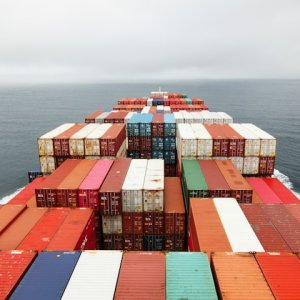
For years, complex freight moves got absorbed into the general drayage pool because the system had enough slack to cover for mediocre execution. A carrier who was loose on permit sequencing, or casual about confirming a warehouse could handle a 14-foot-wide container before it arrived and could get away with it. Congestion wasn’t severe enough to punish the sloppiness. That slack is gone. Global port congestion is at a four-year high, with roughly 3.7 million TEU, about 11 percent of the world’s container fleet, sitting at anchor. Ports including New York/New Jersey are seeing anchorage waits of two to five days. Add a qualified driver pool that’s inherently small, since drayage drivers need TWIC credentials and real port familiarity on top of a commercial license. Additionally, new federal non-domicile CDL enforcement, which is expected to pull tens of thousands of non-qualifying drivers out of the pool as licenses expire, and there’s little room left for carriers who are still figuring it out.
The carriers who were always cutting corners are the ones generating the multi-day delays making headlines. Fleet size was never the real differentiator between a reliable drayage partner and an unreliable one. Whether a carrier had executed that specific type of move before always was. The market didn’t punish the difference. Now it does, every time.
What Qualification Should Mean
These changes have impacted what qualification should mean in practice, and it starts well before a container hits the water. Carrier vetting has to happen lane by lane, not carrier by carrier. A trucking company that handles overdimensional loads well in Savannah is not automatically qualified to do it in Los Angeles. Permit history, weight distribution experience, and terminal relationships are lane-specific, and treating them as transferable is how shippers get burned. Warehouse and transload capacity needs to be confirmed at the planning stage, not after arrival. If a container needs 14-foot clearance and a warehouse partner’s dock doors are 12 feet, that needs to surface during booking, not when the truck shows up. Redundancy has to be built in deliberately: two or three vetted carriers per complex lane, not one primary carrier with a backup that’s never been tested under real conditions.
This Isn’t a Peak-Season Problem
The reason this matters now, and not just as a peak-season footnote, is that the industry keeps treating each congestion spike as a one-off that eases once volumes normalize. That’s the wrong model. Trade policy volatility, shifting sourcing patterns, and structural driver shortages aren’t seasonal conditions that reverse themselves. They’re the operating environment for the next several years. Shippers and brokers who treat 2026’s congestion as an anomaly will make the same planning mistakes in 2027, and the year after that, because the underlying constraint isn’t going away.
The Question That Predicts Outcomes
The ones who come out ahead won’t be the ones asking whether the industry has enough capacity in aggregate. They’ll be the ones asking a narrower, more useful question about their own lanes: has this specific carrier, on this specific lane, moved this specific type of freight before? Not whether they’re big enough, or whether they have trucks sitting idle. Whether they’ve done it, and done it in a way that didn’t generate a demurrage bill.
That question, more than rate, fleet size, or sales pitch, predicts whether a container clears port in two days or sits in five. It’s also the question the industry has been asking too late, after freight is already stuck, instead of during carrier selection. Shippers who start qualifying carriers this way now, ahead of the next peak season rather than in reaction to this one, will be the ones with a better cost and reliability profile a year from now. Everyone else will be relearning the same lesson on the next congestion spike, and the one after that.


.webp)