18001808777 (Toll Free)
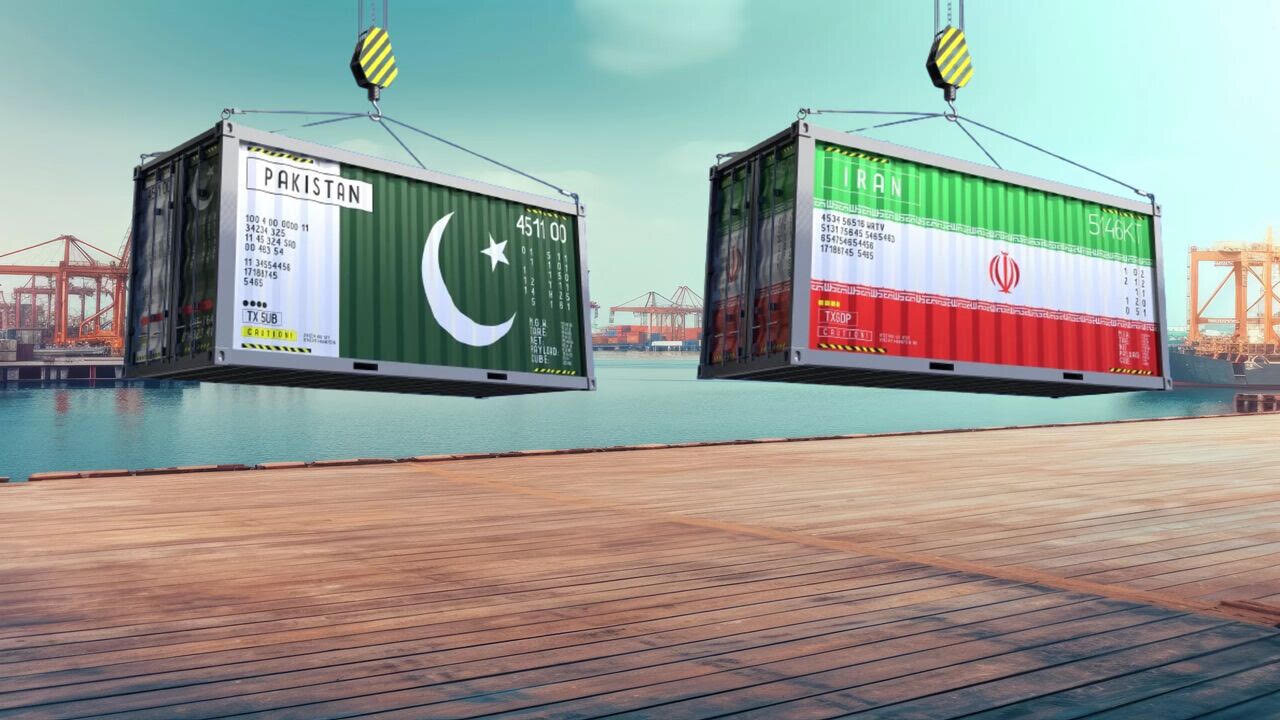
Pakistan's trade deficit widened by almost a fifth in October to $4.13bn, as dearer crude and a doubling of steel purchases lifted imports to $7.13bn, the statistics bureau said, Mettis Link News reported.
Exports barely moved, edging up 0.13% from September to $3.00bn, according to the advance release the Pakistan Bureau of Statistics (PBS) published on November 20. Imports were 10.7% higher on the month and 17.1% higher on the year, leaving the deficit 19.9% above September's $3.45bn and 27.6% above the $3.24bn of October 2025.
Over the first four months of the 2026-27 fiscal year exports grew 10.2% to $11.51bn, a respectable pace for a textile-heavy basket, but imports rose 14% to $26.29bn from a base more than twice as large. The four-month shortfall reached $14.78bn, up 17.2%. Pakistan cannot export its way out of that gap at current rates; the money that closes it comes from workers abroad, and October showed how much weight they now carry.
Textiles, 57% of October's exports by value, earned 5.4% more than a year earlier at $1.70bn, according to the bureau's export table. Cotton yarn jumped 49% to $84mn, while refined petroleum shipments fell 39% to $129mn.
Paying more for less oil
Energy accounts for the biggest slice of the rise. Pakistan spent $865mn on crude oil in October, 59% more than a year earlier, while buying 12% fewer tonnes, the bureau's import table shows. That works out at about $935 a tonne against roughly $515 a year ago, the cost of buying oil since the US-Israel war on Iran began in February and Iran's blockade of the Strait of Hormuz disrupted Gulf shipping. Refined products cost $587mn, 8% more, on volumes down by almost a third.
Liquefied natural gas went the other way, falling to $70mn from $209mn as QatarEnergy's force majeure left Islamabad hunting for emergency cargoes for the winter. Fertiliser purchases rose 46% to $198mn on almost unchanged tonnage, another price effect of the war's fertiliser shock.
Steel and a provisional bill
Steel was about volume rather than price. Iron and steel imports doubled to $499mn on a 95% increase in tonnage, plastic materials climbed 45% to $331mn and mobile phones 25% to $181mn. Those are the purchases of an economy whose central bank expects growth of 3.5-4.5% this fiscal year and says faster growth, tariff cuts and costlier commodities will push imports higher.
Part of October's bill may yet change. The bureau's revised summary says the import total includes a single transaction of PKR55.6bn ($201mn) that is still subject to verification, plus PKR43.3bn ($157mn) of Federal Board of Revenue batch data booked on its feeding date. Together they come to roughly a third of the $1.04bn year-on-year rise in imports.
Remittances carry the account
The State Bank of Pakistan (SBP) counts a smaller gap. Its balance of payments, which values goods free on board and is compiled separately from the customs data, put October goods imports at $5.87bn and the goods deficit at $2.97bn. The difference between the two import measures was $1.26bn, almost double the $683mn of October 2025.
Workers' remittances of $3.89bn, up 13.8% on the year, more than covered that shortfall, and the current account swung to a $39mn surplus from a $371mn deficit in September. Over July-October the current account deficit narrowed to $850mn from $1.06bn a year earlier, even though the goods deficit widened by $1.83bn, since remittances rose by $1.81bn.