Ditwah impact on Export sec.: Prolonged disruption to lead to econ. consequences
Any prolonged disruption to Sri Lanka’s export sector by prevailing weather conditions, amidst Sri Lanka’s fragile economic recovery period, could lead to wide-ranging economic consequences, the National Chamber of Exporters said in a statement released yesterday (1).
“Sri Lanka’s export sector is the backbone of the national economy, contributing significantly to foreign exchange earnings, employment generation, and overall economic stability,” the statement said. “The country is already navigating a fragile economic recovery, and any prolonged disruption to export activities will have far-reaching consequences.”
The Sri Lankan economy grew by 4.8% in the first half of 2025, which saw this momentum carried into the third quarter. The Central Bank of Sri Lanka reported that Sri Lanka’s growth of 4.9% in Q2 was considered the eighth consecutive quarter of positive growth.
In March, Sri Lanka had by then met and exceeded crucial fiscal and monetary targets set by the IMF, as observed by the multilateral during its third programme review.
According to the NCE, which has been monitoring the developing situation surrounding the effects of the weather conditions on the export segment, the sector has been adversely affected.
“Early indications reveal that many exporters have been heavily impacted, with several production facilities going under-water, causing significant damage to machinery, equipment, stocks, and critical infrastructure.” Owing to these disruptions, the NCE stated that operations of many companies have since come to a standstill, on top of a growing industry-wide concern over the ability to meet international delivery timelines.
“Production cycles have been interrupted, delaying the fulfilment of overseas orders. Equipment and factories have suffered severe damage, requiring costly repairs and replacements,” the Chamber said in its statement.
“Supply chains, including transport routes, storage facilities, and labour access, have been disrupted. SMEs and aspiring exporters are at high risk, as many do not have the financial buffers to recover quickly.”
It added that as exporters, maintaining the trust and confidence of buyers is of utmost priority. “Any significant delay in shipments can result in cancelled contracts, loss of market access, and long-term setbacks for companies who have invested years in building their reputations.”
“For Sri Lanka, ensuring uninterrupted export performance is essential not only for business continuity, but also for national economic resilience. Therefore, it is vital that affected exporters receive swift support so they can resume operations as quickly as possible.”
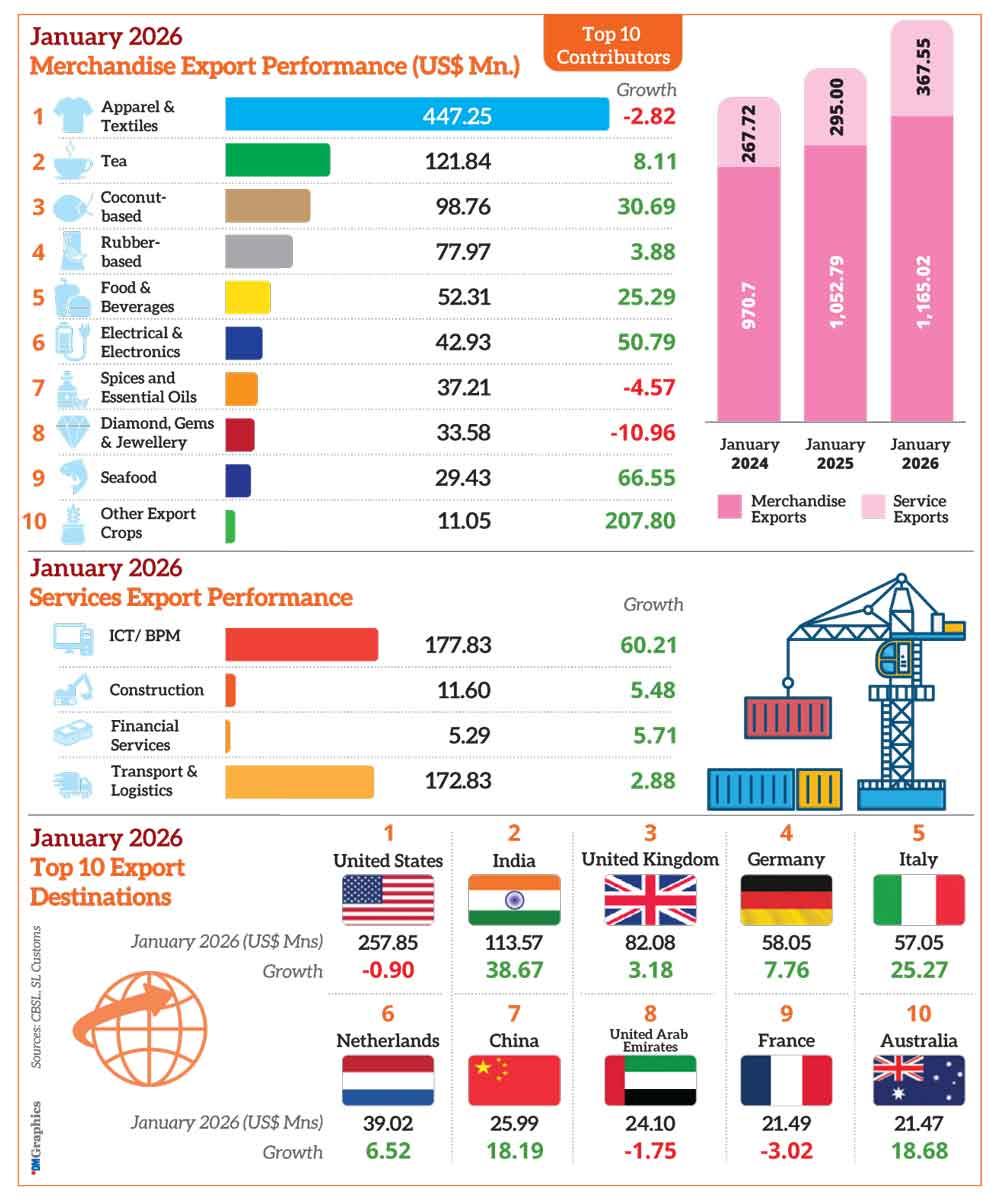
Sri Lanka’s trade deficit, by October this year, saw a sharp increase in year-on-year terms, widening from the $ 544.4 million recorded in October 2024, to $1,007.4 million in October 2025, as the growth in imports outpaced exports. Further, exports saw a notable marginal decline during the month, across certain export segments.
NCE Secretary General and CEO Shiham Marikar, quoted within the statement said: “The NCE is actively collecting on-the-ground information from affected exporters, including MSMEs…Early feedback indicates widespread disruptions, including flood-damaged production floors, equipment failures, stalled supply chains, and workforce challenges.”
“We urge the Government to urgently collaborate with the NCE to develop and implement short-term and long-term relief measures including financial assistance, expedited repair support, and facilitation for exporters who are struggling to meet shipment deadlines. A swift and coordinated recovery plan is essential for ensuring that Sri Lanka does not lose its hard-earned market access and global competitiveness.”