SL apparel exporters await Trump’s new tariffs following US Supreme Court decision
Sri Lanka’s apparel sector is bracing for a fresh wave of volatility after United States President Donald Trump announced a sudden escalation of global import duties to 15 percent. The move came just a day after the US Supreme Court struck down his previous sweeping tariff regime, which had been enacted under emergency economic powers.
Furious over the ruling, Trump explicitly vowed to restore the earlier tariffs through other legal avenues. Consequently, the US administration immediately pivoted, invoking a different statute to initially impose a 10 percent global levy before rapidly raising it to the 15 percent mark over the weekend. This unpredictable policy environment has left Sri Lankan exporters in a highly precarious position, particularly given that the island nation has not yet finalised a formal trade agreement with the US.
Before the landmark Supreme Court decision invalidated the prior tariff regime, Sri Lanka had successfully negotiated its US import duty down to 20 percent, securing a vital reduction from the steep 44 percent levy initially proposed last year. This negotiated 20 percent rate placed Sri Lanka in a highly competitive bracket alongside its primary regional rivals, but some competitors had a marginal advantage.
Prior to the Court’s overturn, competing manufacturing hubs such as Vietnam and Bangladesh were subjected to the same 20 percent tariff rate, while nations like Cambodia and Indonesia held a slight edge at 19 percent. In contrast, regional giants like India faced a steeper 25 percent levy. The comparable tariff structures under the previous regime had allowed local apparel manufacturers to maintain their market share to a certain extent, making the sudden shift to a new, untested universal 15 percent baseline a significant disruptor to ongoing supply chain strategies.
Sharing his insights on the unfolding situation, Joint Apparel Association Forum Chairman Felix A. Fernando noted that the current global trade environment is exceptionally volatile. He observed that the Supreme Court’s decision essentially renders the previously negotiated trade agreements null and void.
However, he offered a measure of reassurance to stakeholders, stating that the future impact on the local industry is minimised, at least for the time being. Nevertheless, without a secured bilateral trade pact, Sri Lanka remains highly sensitive to unilateral policy shifts in Washington, which stands as its largest single export market.
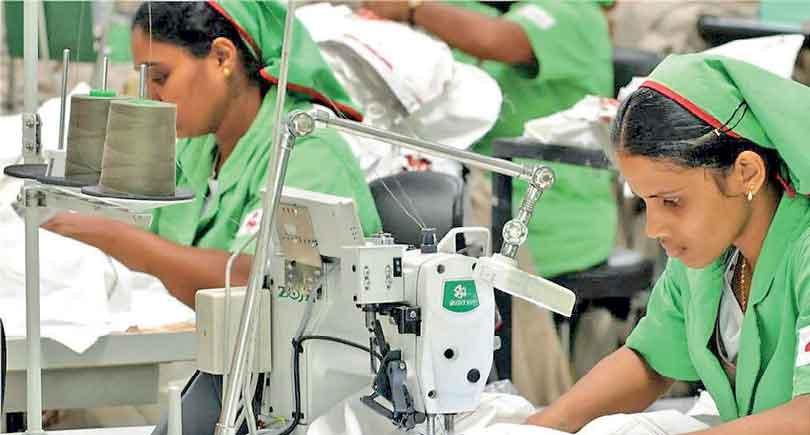
Despite the lingering unpredictability, the country’s apparel sector demonstrated remarkable resilience over the past year. Fernando highlighted that Sri Lanka performed better than its competitors in 2025, noting confidently that ‘the industry is doing good’.
Reflecting this resilience, official sector data shows that total textile and apparel exports in 2025 reached $5.02 billion, marking a steady recovery from the $4.76 billion recorded in 2024. The US market remained the primary driver of this performance, absorbing $1.95 billion of the 2025 total, up from $1.91 billion the previous year. This translates to the US accounting for nearly 39 percent of the industry’s total export volume, heavily contributing trillions of Rs. to the local economy and underscoring the severe implications of the sudden tariff shifts. Looking ahead, JAAF expects a continued 10 percent growth in apparel exports this year.
To secure long-term stability and reach the industry’s ambitious export target of $8 billion by 2030, systemic changes are urgently required. Fernando emphasized that substantial groundwork must be laid out to maintain and accelerate this momentum. He stressed the critical need for new investors, implementing new laws and aggressively pursuing new free trade agreements. Expanding Sri Lanka’s network of trade pacts will be essential to insulating the sector from sudden tariff shocks and maintaining its competitive edge against regional manufacturing powerhouses.
A major unresolved issue stemming from the recent Supreme Court ruling is the fate of the tariffs already collected by US customs. Over the past year, some Sri Lankan exporters bore a portion of the cost of the previous 20 percent tariffs to protect their market share and keep prices competitive for US buyers. Following the court’s decision, there was widespread optimism that these exporters would receive a refund. However, the Supreme Court did not establish or mandate a specific reimbursement mechanism in its ruling. Legal and trade experts warn that the process of recovering these funds will likely be a complex, protracted administrative challenge, leaving the anticipated financial relief for Sri Lankan exporters hanging in the balance.