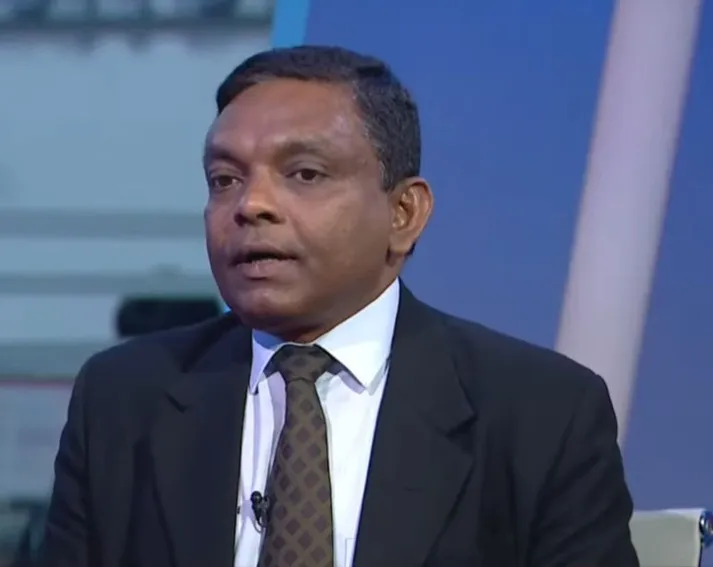
Sri Lanka is expected to face a significant risk of a decline in remittances from the Middle East due to the ongoing USA-Israeli conflict, said University of Colombo Department of Economics Head Prof. Priyanga Dunusinghe speaking on Ada Derana Big Focus with Pasan de Silva, recently.
“A significant impact due to this Gulf war conflict is that it will impact the foreign remittances to Sri Lanka. Approximately more than one million of Sri Lankans are migrating to the region, which is around 70% of the labour and remittances around $ 3.5 billion comes to the country. Annual remittances are often around $ 7-8 billion, and from that, 50% of remittances come from the Middle East,” said Prof. Dunusinghe.
He added: “If this Gulf war conflict continues, there is a high risk to foreign inflows to the country. Also, in terms of the export sector, 6-8% goes to the Middle East, including tea, rubber, spices, etc., including to Saudi Arabia and Qatar. This is an escalating risk to the export sector.”
“An estimation of around $ 1.4 billion loss is to be expected to the export sector. Also secondly, this is an upcoming risk to the tourism sector in the country due to increasing transport cost, risk of high global inflation, and economic insecurity, which will affect the days ahead as a result of the ongoing war conflict,” he stated.
Prof. Dunusinghe further stated: “One of the key concerns right now is the surging oil price in the global market. Global oil prices rose to over $ 100 per barrel on 8 March for the first time since the Russia-Ukraine war erupted. The same day, prices were around $ 115 per barrel. If the ongoing war is to escalate further, he projected that oil per barrel might go to around Rs. 370 from Rs. 290 in Sri Lanka, and the risk is high. Due to this shock, the country is at risk of higher inflation.”
Furthermore, he added that the Government will have to spend more to import oil and gas, which can increase up to two times the US dollar billions spent now, in the coming months of the year, creating a liquidity risk in the country.
If the inflows decline because of the conflict, it can create a significant economic instability in the country, leading to insolvency and inadequate reserves to even pay the debts of the country.
If a consensus couldn’t be reached soon, the consequences for Sri Lanka would be devastating, Prof. Dunusinghe said, pointing out that the Government should consider, “even though a relatively small impact for the time being, immediate fuel hike actions to cushion the impact of future fuel price hikes.”