Hapag-Lloyd steps up methanol strategy with $500m feeder ship investment
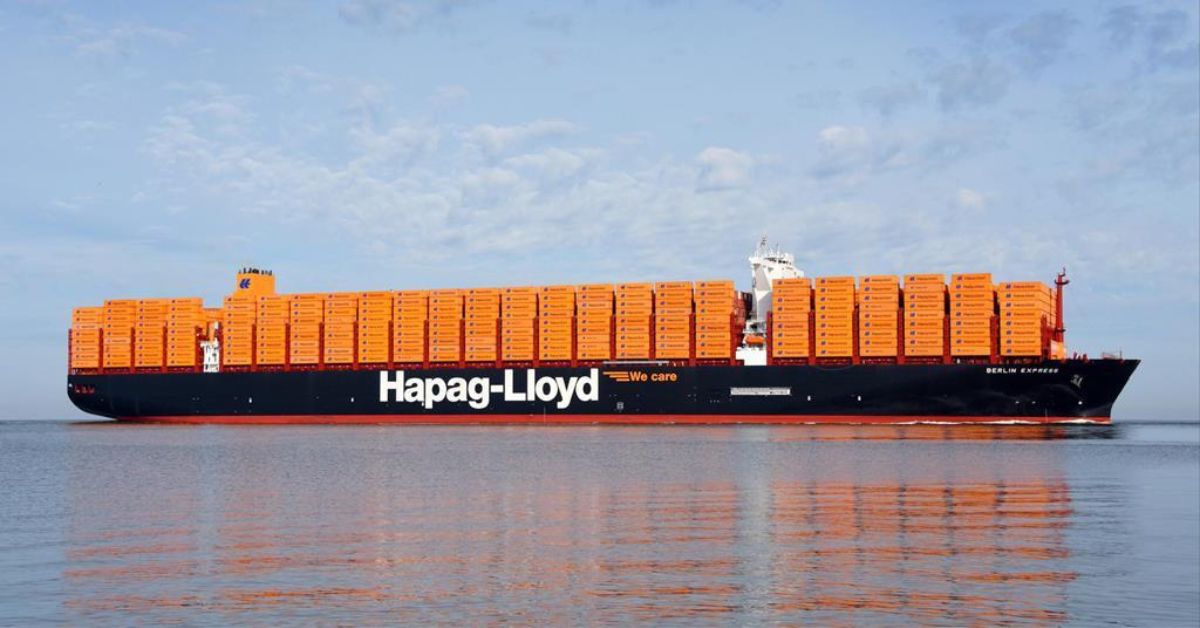
Hapag-Lloyd has moved ahead with a major fleet modernization program, confirming orders for eight methanol-capable container ships and long-term charter deals for another 14 vessels, as it sharpens its focus on efficiency and decarbonization.
The German liner company has contracted China’s CIMC Raffles to build eight 4,500-TEU container ships equipped with dual-fuel engines that can operate on methanol or conventional marine fuels. Delivery of the new buildings is scheduled for 2028 and 2029, with the total investment exceeding $500m. This marks Hapag-Lloyd’s first newbuild order specifically designed around methanol propulsion.
According to the carrier, the ships will be up to 30% more fuel-efficient than older vessels of a similar size. When operated on methanol, they are expected to reduce carbon emissions by as much as 350,000 tonnes of CO₂ equivalent annually.
In parallel with the newbuild program, Hapag-Lloyd has secured long-term charters for 14 additional feeder ships to be delivered between 2027 and 2029. The chartered vessels include four ships of about 1,800 TEU, six of 3,500 teu and four of 4,500 TEU. Combined with the CIMC Raffles order, the company will add or replace capacity across 22 vessels below the 5,000-TEU segment, in line with plans outlined earlier this year.
The methanol-fuelled order complements Hapag-Lloyd’s existing alternative-fuel strategy. The carrier already has 37 LNG dual-fuel ships either in service or on order, all capable of running on biomethane. It has also agreed with Seaspan to retrofit five 10,100-TEU ships for methanol dual-fuel operation in 2026 and 2027 and last year signed a long-term agreement with Goldwind in China to secure 250,000 tonnes of green methanol annually. The blend of bio- and e-methanol is expected to cut greenhouse gas emissions by at least 70%.
Hapag-Lloyd is aiming to reduce absolute fleet emissions by one-third by 2030 compared with 2022 levels and to achieve net-zero operations by 2045. As of the end of September, the company operated more than 300 vessels with a combined capacity of around 2.5m TEU, making it the world’s fifth-largest container shipping line.